
Bison and Nutrition Facts
Bison, commonly referred to as the American Plains Buffalo, once roamed the entire North American Continent with their numbers estimated at over 60 million. Bison were an integral part of the ecosystem for centuries, thriving on wild and drought resistant western grasses, native shrubs, flowers and other plants. Bison were the economic and spiritual focal point of the Plains Indians, supplying them with food, clothing and shelter.
Bison generally produce one 40-50 pound calf at a rate of one per year, with cows reproducing well into their 20’s. A mature cow will, on average, weigh 1,000-1,200 pounds. A mature bull will average 1,500-2,000 pounds. One Bison bull can service 10-15 cows. Bison with plenty of good pasture and water are generally content and will stay put. The suggested stocking rate is generally the same as cattle in a particular area. Bison are more efficient feed converters than cattle and should do very well with that ratio.
Bison meat is low in cholesterol, fat and calories, but high in protein, making it the heart healthy red meat. It tastes good too. The taste is very similar to the best beef you ever tasted, hearty, sweet and rich with no gamey taste at all. Health conscious consumers are also attracted to the fact that Bison are raised with no growth stimulants, hormones or antibiotics.
ALL NATURAL BISON
Low in Cholesterol and Fat
Low in Calories
High in Protein
No Growth Hormones, Stimulants or Antibiotics
Environmentally Friendly
The Eastern Bison Association promotes the raising of bison without growth hormones, stimulants or sub-therapeutic antibiotics.
NUTRITIONAL COMPARISON* Comparison of bison sirloin, beef sirloin (choice) and chicken breast with skin on All samples 100 grams (3.5 oz)
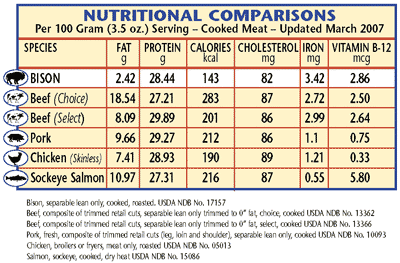
Nutritional Comparisons